Political Science
The Applied Social Science major with Political Science concentration at Wilmington College offers students the opportunity to pursue careers in international affairs, public administration, legislative affairs, lobbying, nongovernmental organizations, and law. Political Science students study the institutions and processes created by society to make collective decisions about human problems. Courses in this field address issues of justice and human rights, social movements, and economic development as they relate to the distribution of power in society.
In keeping with the College mission, the Applied Social Sciences major with Political Science concentration encourages students to explore conflict resolution and peacemaking in both national and international contexts. This major is compatible with virtually all other majors at Wilmington College, and students in this program often double major with Criminal Justice, Psychology, Spanish, Business Administration, and History or minor in Sustainability and Sociology. Students taking other majors may also earn a Political Science minor.
Loading
Political Science Core Curriculum
Here’s a sample of the coursework you will complete for the Political Science major.
| Course Number | Course Name |
|---|---|
| PS130 | American Politics |
| PS234G | Global Politics |
| PS343 | Public Policy and Advocacy |
Degree Requirements

Political Science
Studying Political Science at Wilmington College provides you with the opportunity to better understand the world and your place in it. We challenge you to use logical and critical thinking in learning about controversial topics while, at the same time, valuing other’s opinions.
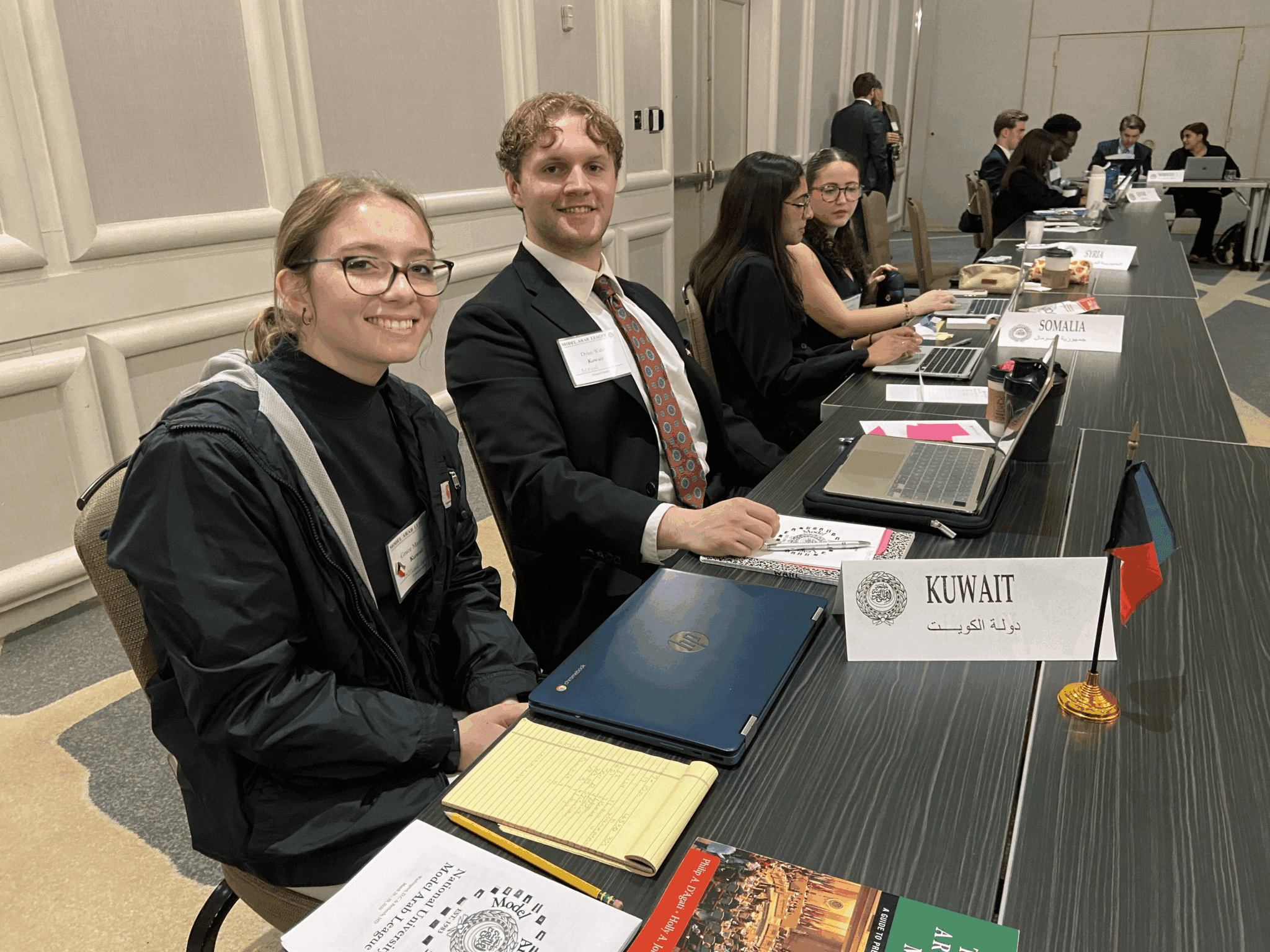
Experiential learning opportunities offer exposure to diverse viewpoints and enhance students’ knowledge and skills within the field of Political Science. You will have the opportunity to present your research at state and national conferences, possibly even conducting research with a faculty member for publication in a scholarly journal or college textbook. You will learn about bipartisan problem-solving from legislators and other policymakers. You can visit embassies for briefings and engage in the art of diplomacy through regional, national, and international Model Arab League conferences focusing on security, economic, political, social, and environmental issues affecting the Arab world. You can participate in the annual Spring Lobby Weekend in Washington, DC, which has become a signature hands-on learning activity at WC. There, you will learn about subjects such as mass incarceration, immigration, or income inequality, and learn from experts how to lobby before actually lobbying your Congressional representative. This experience with “finding your voice” has been life-changing for many students.
Faculty Spotlight
Loading
Loading
Loading
Loading
Loading
Loading
Ask Us Anything About Political Science at Wilmington College
Interested in the Political Science major or related degrees and programs? Our admission team is ready to answer any questions you may have. Reach out to us today, or learn how to apply to Wilmington College.